مقدمة: قلب تحت الضغط: لماذا يهمنا تضخم البطين الأيسر؟
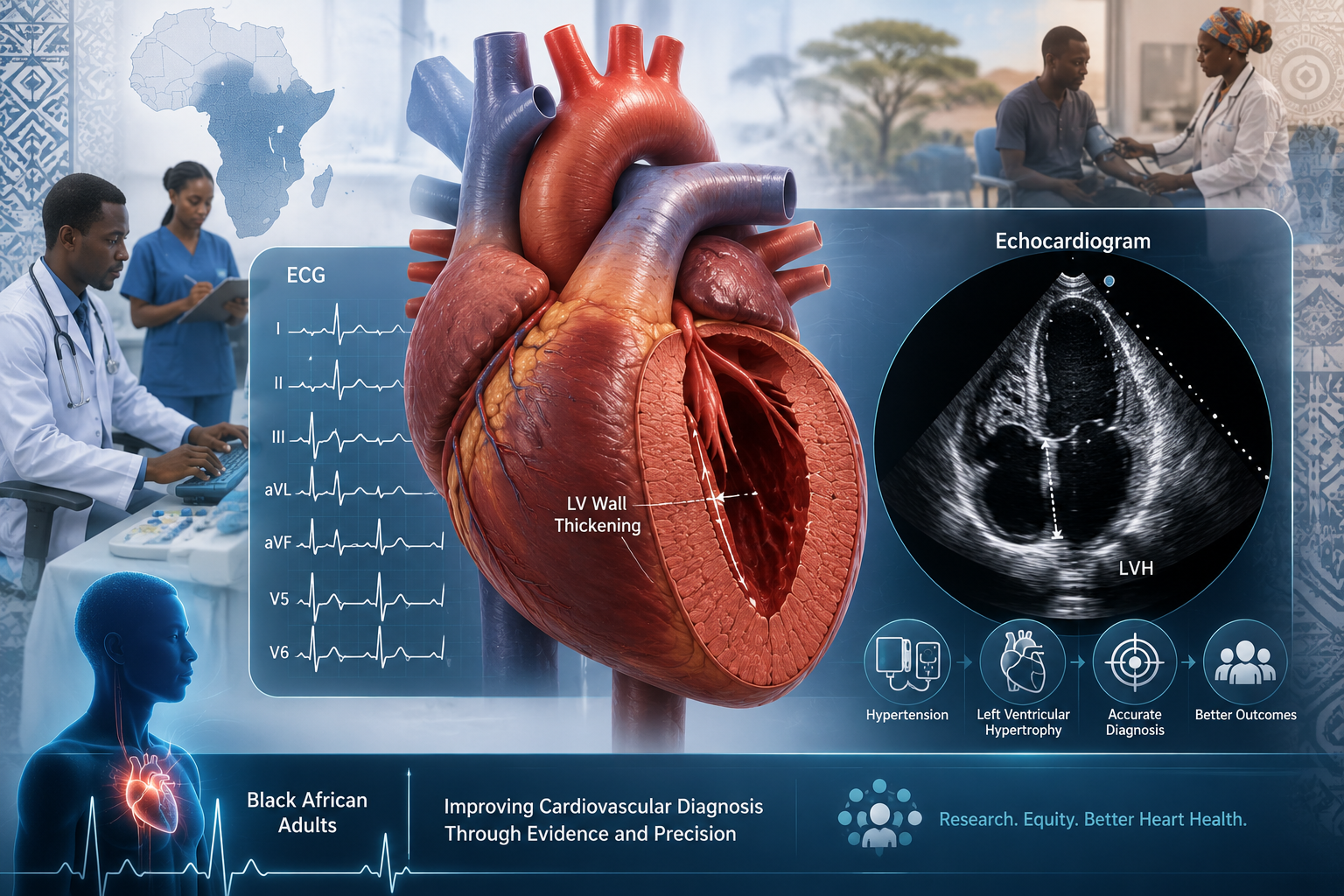
القلب هو محرك الحياة، يضخ الدم بلا كلل ليغذي كل خلية في أجسامنا. ولكن ماذا يحدث عندما يتعرض هذا المحرك لضغط مستمر؟ في كثير من الأحيان، يؤدي ارتفاع ضغط الدم المزمن إلى حالة تُعرف باسم تضخم البطين الأيسر (Left Ventricular Hypertrophy - LVH). البطين الأيسر هو الحجرة الأقوى في القلب، والمسؤولة عن ضخ الدم إلى الشريان الأورطي ومنه إلى بقية الجسم. عندما يرتفع ضغط الدم، يضطر البطين الأيسر للعمل بجهد أكبر لضخ الدم، ومع مرور الوقت، تتضخم عضلاته وتصبح أكثر سمكًا، تمامًا كأي عضلة أخرى يتم تدريبها باستمرار.
في البداية، قد يبدو هذا التضخم وكأنه تكيف إيجابي، حيث يصبح القلب أقوى. لكن في الواقع، هذا التضخم يزيد من خطر الإصابة بمضاعفات خطيرة مثل قصور القلب، والسكتة الدماغية، والنوبات القلبية، وحتى الموت المفاجئ. لذا، فإن التشخيص المبكر لتضخم البطين الأيسر أمر بالغ الأهمية لإدارة ارتفاع ضغط الدم ومنع هذه المضاعفات.
أحد أكثر الأدوات التشخيصية شيوعًا وبأسعار معقولة هو تخطيط القلب الكهربائي (Electrocardiogram - ECG). يقيس تخطيط القلب النشاط الكهربائي للقلب ويمكن أن يكشف عن علامات تضخم البطين الأيسر. ومع ذلك، فإن معظم المعايير المستخدمة لتفسير تخطيط القلب الكهربائي قد تم تطويرها بناءً على دراسات أجريت على سكان من أصول غير إفريقية. وهذا يثير تساؤلًا مهمًا: هل هذه المعايير دقيقة بنفس القدر عند تطبيقها على البالغين الأفارقة، الذين قد تكون لديهم اختلافات فسيولوجية ووراثية تؤثر على كيفية استجابة قلوبهم لارتفاع ضغط الدم؟ هذا هو السؤال الجوهري الذي سعت دراسة حديثة للإجابة عليه.
نظرة فاحصة على الدراسة:
⚕️ تنويه طبي: هذا المقال لأغراض تثقيفية فقط ولا يُغني عن استشارة الطبيب المختص. لا تتوقف عن أي علاج أو تبدأ علاجاً جديداً بناءً على هذا المقال دون مراجعة طبيبك.
📚 المصدر: Global heart, PMID: 42499811, DOI: 10.5334/gh.1562Electrocardiographic (ECG) criteria for detecting left ventricular hypertrophy (LVH) have largely been derived from non-African populations. Their diagnostic performance in Black African adults with untreated hypertension remains uncertain.To evaluate the diagnostic performance of established ECG-LVH criteria compared with echocardiographically assessed left ventricular mass index (LVMI) in Black African adults with untreated, uncomplicated hypertension enrolled in the coArtHA trial.In this subanalysis, we included 1,125 participants from rural Tanzania and Lesotho who underwent baseline 12-lead ECG and focused transthoracic echocardiography (fTTE). LVH was defined as LVMI > 95 g/m² in women, and >115 g/m² in men. Diagnostic performance of multiple ECG-LVH criteria was assessed using correlation analyses, sensitivity and specificity estimates, receiver-operating characteristic (ROC) analysis, including calculation of the area under the ROC curve (AUROC), and precision-recall curves (PRC).Echocardiographic LVH was present in 56 (5%) participants. Across continuous ECG indices, Cornell voltage product adjusted by +0.8 mV in women showed the strongest association with LVMI (Spearman's rho = 0.37, p < 0.001). Among evaluated criteria, Cornell voltage product-based measures demonstrated the most consistent diagnostic performance across evaluated metrics, with an AUROC of approximately 0.76. Using established cut-off values, this criterion yielded a sensitivity of 64% and a specificity of 80%, whereas voltage-only criteria, including Multi-Ethnic Study of Atherosclerosis (MESA)- and Sokolow-Lyon-based indices, showed limited accuracy in this setting. Exploratory analyses of alternative cut-off values demonstrated the expected sensitivity-specificity trade-offs.In this cohort of hypertensive Black African adults, ECG criteria showed a moderate association with LVMI by echocardiography. Among established ECG criteria, Cornell voltage product-based measures demonstrated the most consistent diagnostic performance. Diagnostic characteristics were strongly influenced by cut-off selection and clinical context, underscoring the need for population-specific evaluation and external validation of ECG criteria for LVH in African settings.Clinicaltrials.gov NCT04129840. Registered on October 17, 2019 (https://www.clinicaltrials.gov/).Copyright: © 2026 The Author(s).VischerAnnina SAS0000-0001-5188-1723Medical Outpatient Department and Hypertension Centre, ESH Hypertension Centre of Excellence, University Hospital Basel, Basel, Switzerland.University of Basel, Basel, Switzerland.NemtsovaValeriyaV0000-0001-7916-3168Medical Outpatient Department and Hypertension Centre, ESH Hypertension Centre of Excellence, University Hospital Basel, Basel, Switzerland.LukauBlaiseB0009-0006-5373-4747SolidarMed, Partnerships for Health, Maseru, Lesotho.RohacekMartinM0000-0002-0547-1923Ifakara Health Institute, Ifakara branch, Ifakara, United Republic of Tanzania.Swiss Tropical and Public Health Institute, Allschwil, Switzerland.St. Francis Regional Referral Hospital, Ifakara, United Republic of Tanzania.MackoJonathanJMedical Outpatient Department and Hypertension Centre, ESH Hypertension Centre of Excellence, University Hospital Basel, Basel, Switzerland.OehriJohannaJ0009-0007-9518-6619Medical Outpatient Department and Hypertension Centre, ESH Hypertension Centre of Excellence, University Hospital Basel, Basel, Switzerland.University of Basel, Basel, Switzerland.Swiss Tropical and Public Health Institute, Allschwil, Switzerland.MapesiHerryH0000-0001-7753-464XUniversity of Basel, Basel, Switzerland.Ifakara Health Institute, Ifakara branch, Ifakara, United Republic of Tanzania.Swiss Tropical and Public Health Institute, Allschwil, Switzerland.VanobberghenFionaF0000-0002-8908-0953University of Basel, Basel, Switzerland.Swiss Tropical and Public Health Institute, Allschwil, Switzerland.KatendeAndrewA0000-0001-6221-8409Ifakara Health Institute, Ifakara branch, Ifakara, United Republic of Tanzania.St. Francis Regional Referral Hospital, Ifakara, United Republic of Tanzania.GuptaRaviRSolidarMed, Partnerships for Health, Maseru, Lesotho.WilsonHerieth IsmaelHIIfakara Health Institute, Ifakara branch, Ifakara, United Republic of Tanzania.AmstutzAlainA0000-0003-1716-993XDivision of Clinical Epidemiology, Department of Clinical Research, University Hospital Basel, Basel, Switzerland.Oslo Centre for Biostatistics and Epidemiology, Oslo University Hospital, Oslo, Norway.Bristol Medical School, University of Bristol, Bristol, United Kingdom.SenkoroElizabethE0000-0001-6029-8249Ifakara Health Institute, Ifakara branch, Ifakara, United Republic of Tanzania.ByakuzanaTheonestinaTIfakara Health Institute, Ifakara branch, Ifakara, United Republic of Tanzania.MbundaGeofreyGIfakara Health Institute, Ifakara branch, Ifakara, United Republic of Tanzania.SiruJamaliJ0009-0004-1449-5734Ifakara Health Institute, Ifakara branch, Ifakara, United Republic of Tanzania.GingoWinfridW0000-0002-6881-6896St. Francis Regional Referral Hospital, Ifakara, United Republic of Tanzania.LabhardtNiklaus DanielND0000-0003-3599-1791University of Basel, Basel, Switzerland.Swiss Tropical and Public Health Institute, Allschwil, Switzerland.Division of Clinical Epidemiology, Department of Clinical Research, University Hospital Basel, Basel, Switzerland.Division of Infectious Diseases, University Hospital Basel, Basel, Switzerland.Department of Cardiology, University Hospital Basel, Basel, Switzerland.WeisserMajaM0000-0002-0134-1929Ifakara Health Institute, Ifakara branch, Ifakara, United Republic of Tanzania.Swiss Tropical and Public Health Institute, Allschwil, Switzerland.Department of Cardiology, University Hospital Basel, Basel, Switzerland.BurkardThiloT0000-0001-6373-9820Medical Outpatient Department and Hypertension Centre, ESH Hypertension Centre of Excellence, University Hospital Basel, Basel, Switzerland.University of Basel, Basel, Switzerland.Department of Cardiology, University Hospital Basel, Basel, Switzerland.engClinicalTrials.govNCT04129840Journal ArticleMulticenter StudyRandomized Controlled Trial20260721EnglandGlob Heart1015843912211-8160IMFemaleHumansMaleMiddle AgedBlack PeopleEchocardiographymethodsElectrocardiographymethodsHypertensioncomplicationsethnologydrug therapyphysiopathologyHypertrophy, Left VentriculardiagnosisetiologyphysiopathologyethnologyROC CurveTanzaniaepidemiologyLesothoechocardiographyelectrocardiographic criteriahypertensionleft ventricular hypertrophysub-Saharan AfricaThe authors have no competing interests to declare.2025111020265212026725637202672563620267254582026721epublish42499811